The friend’s terminal cancer
What Are You Going ThroughThe friend’s terminal cancer is presented not only as a fatal illness but as a condition that forces questions of control, dignity, and how others speak about death into the foreground. She hopes to meet death without panic or anguish, yet the practical uncertainty of her end-of-life plans makes that composure difficult to sustain. Her resistance to conventional stories of hope and courage places the limits of those stories alongside the limits imposed by illness.
Diagnosis and the Language of Illness
The friend’s thoughts of taking her own life had been present from the day of her diagnosis, though when asked directly whether she had considered it, she answered no. The discrepancy between her answer and what the narrator knows makes visible a part of her experience that she does not disclose in that exchange. Her response also stands against the expectation that illness should be narrated as a straightforward struggle toward recovery or acceptance.
She objects to the phrase “bucket list” and prefers “fatal” to “terminal.” She does not believe in an afterlife and is astonished that many other people do. These preferences mark her impatience with language that softens death or places it inside familiar consoling frameworks. The terms people choose do not change her prognosis, but they shape how directly they can acknowledge it.
A Good Death and Its Uncertainty
The friend tries to keep her composure and does not want fear to turn into rage or self-pity. Her idea of a good death centers on freedom from pain, dignity, and remaining clean and dry; she also recognizes that such an ending is uncommon. The distance between this ideal and what dying may actually involve makes her question why a modest measure of comfort and control should be so difficult to obtain. Elsewhere, she insists that she will not die in mortifying anguish, making the prospect of dignity a boundary she wants respected rather than an abstract consolation.
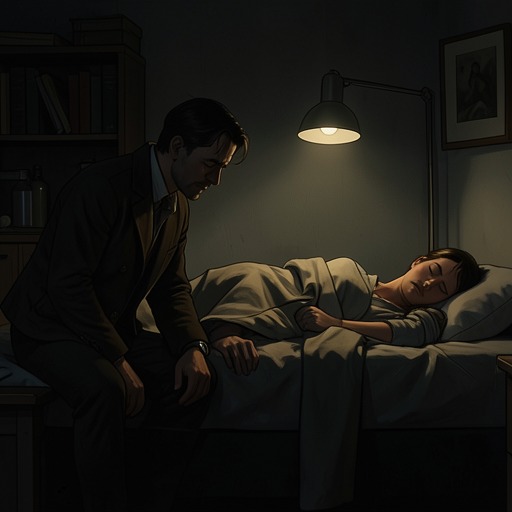
That ideal is strained by the secrecy around the timing of her planned death. She tells the narrator that the day will be apparent when the bedroom door is closed, although she usually leaves it ajar because a closed room makes her feel claustrophobic. One dark morning, the narrator sees the door shut, panics, and is unable to steady herself. The moment shows how a plan intended to give the friend control also leaves the narrator waiting for a sign whose meaning could be final.
The friend later describes what is happening as having become a nightmare and a farce, far from the peace she wanted. The reversal does not erase her wish for a dignified death; it reveals how little the wish can guarantee about the experience of preparing for one. Her preferred ideal and the distress of the circumstances remain in unresolved tension.
Illness, Reality, and Consolation
Not long after her diagnosis, the friend attended several group-therapy sessions at the cancer clinic. The group consisted only of patients and had no professional therapist or other trained facilitator. She was unsurprised that participants repeated similar responses: illness, she observed, is a common experience, and people may respond to it in like ways. The sessions offered a collective setting, but not a distinct voice capable of interrupting the familiar scripts.
She recalls hearing the same advice about positive thinking, miracles, persistence, and not letting cancer win. To her, these clichés did not make reality easier to face; they reminded her how difficult it was for people to accept it. She sees a recurrent impulse either to turn away from reality or to sentimentalize it. Against both responses, her insistence on naming death plainly becomes a demand to attend to the person who is ill rather than to a reassuring story about illness.